
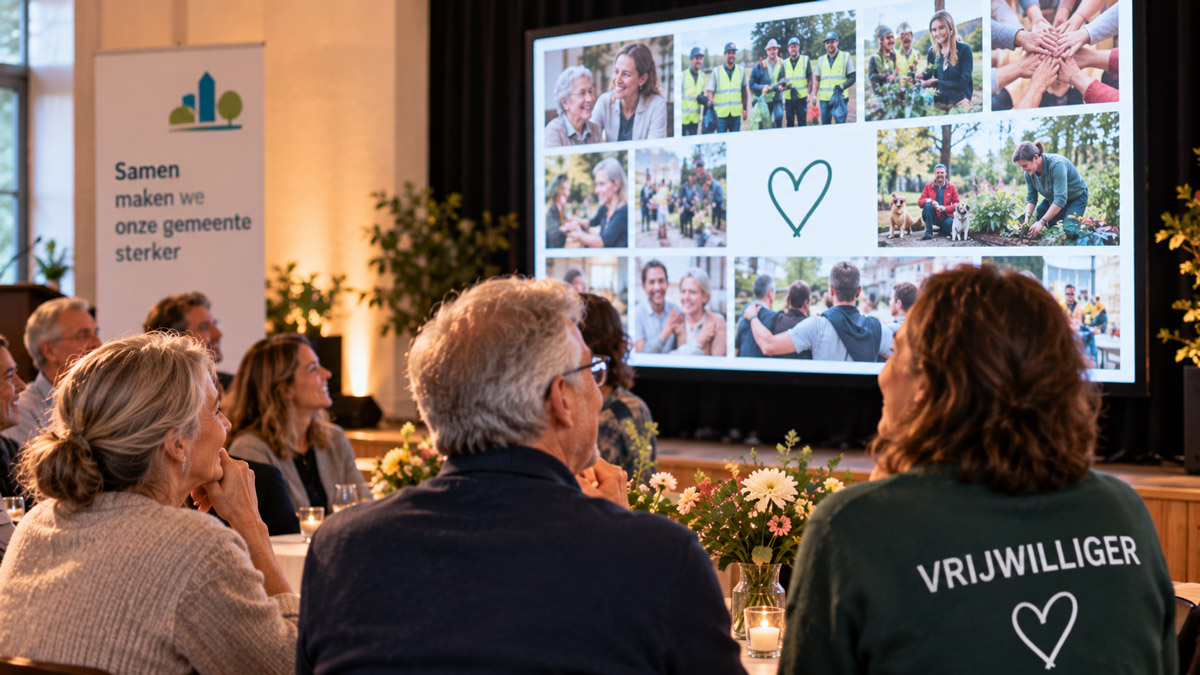
Most municipalities organise a volunteers' day or celebration each year to thank these people, with a reception, a word from the alderman, and sometimes a small token. But a general speech, however sincere, rarely feels personal to the person sitting in the middle of it.
From a general thank-you to personal messages
More and more municipalities complement their volunteers' day with a wish page via Wens on Web. The idea is simple but effective: in the weeks before the event a link is shared where residents, associations and fellow volunteers can leave a concrete thank-you for a volunteer they know. That can be about a specific volunteer by name, or about the volunteers of a particular service or association in general.
What a good thank-you message delivers
Instead of "thank you to all volunteers", a family carer for example reads: "Thank you for visiting my mother every Thursday, it means so much to us as a family." That kind of concrete, personal message weighs psychologically much more than a general word of thanks, and municipalities that already use this also notice it in the reactions afterwards.
How it is used on the day itself
The collected messages are bundled into a digital book of thanks. That can be shown on a large screen during the reception, handed out as a printed booklet per volunteer or per service, or emailed afterwards to anyone who could not attend. Some municipalities choose to read a few messages aloud during the reception as an extra highlight of the evening.
Why this is worth it for a municipality
Volunteers are a scarce and valuable group. Research on volunteering keeps showing that recognition, more than financial compensation, determines how long someone stays active. A municipality that invests in sincere, personal appreciation keeps more volunteers motivated in the longer term, and without extra budget: only the effort to share a link in advance and collect input for a few weeks.
Easy to repeat, year after year
Once the setup is in place, it takes little extra work to repeat this annually. Collecting the messages can run entirely separately from organising the event itself, so it does not add extra load on the service that already organises volunteers' day.